night-out field guides for sound, clothes, routes, and exits
Playlist Note: first room, low volume, no performance tax
June starts the week with a sound palette for rooms where people should be able to arrive before they perform.
Scene archetype: the first room, before the night decides whether it is a story.
The first hour should not announce itself like a trailer. It should lower the social volume enough for people to arrive in their actual bodies. No borrowed celebrity aura, no lyrical costume, no playlist that makes the room prove it is cool before anyone has found a place to put their jacket.
Sound texture: warm bass, dry drums, brushed percussion, and enough negative space for conversation to keep its shoulders down. Let the first twenty minutes stay low. The brighter turn can arrive after the room has stopped checking itself in the mirror.
Track shape: choose pulse over spectacle. A good first-room sequence has a floor, a little smoke, and one clean lift. It should make movement available without making performance mandatory.
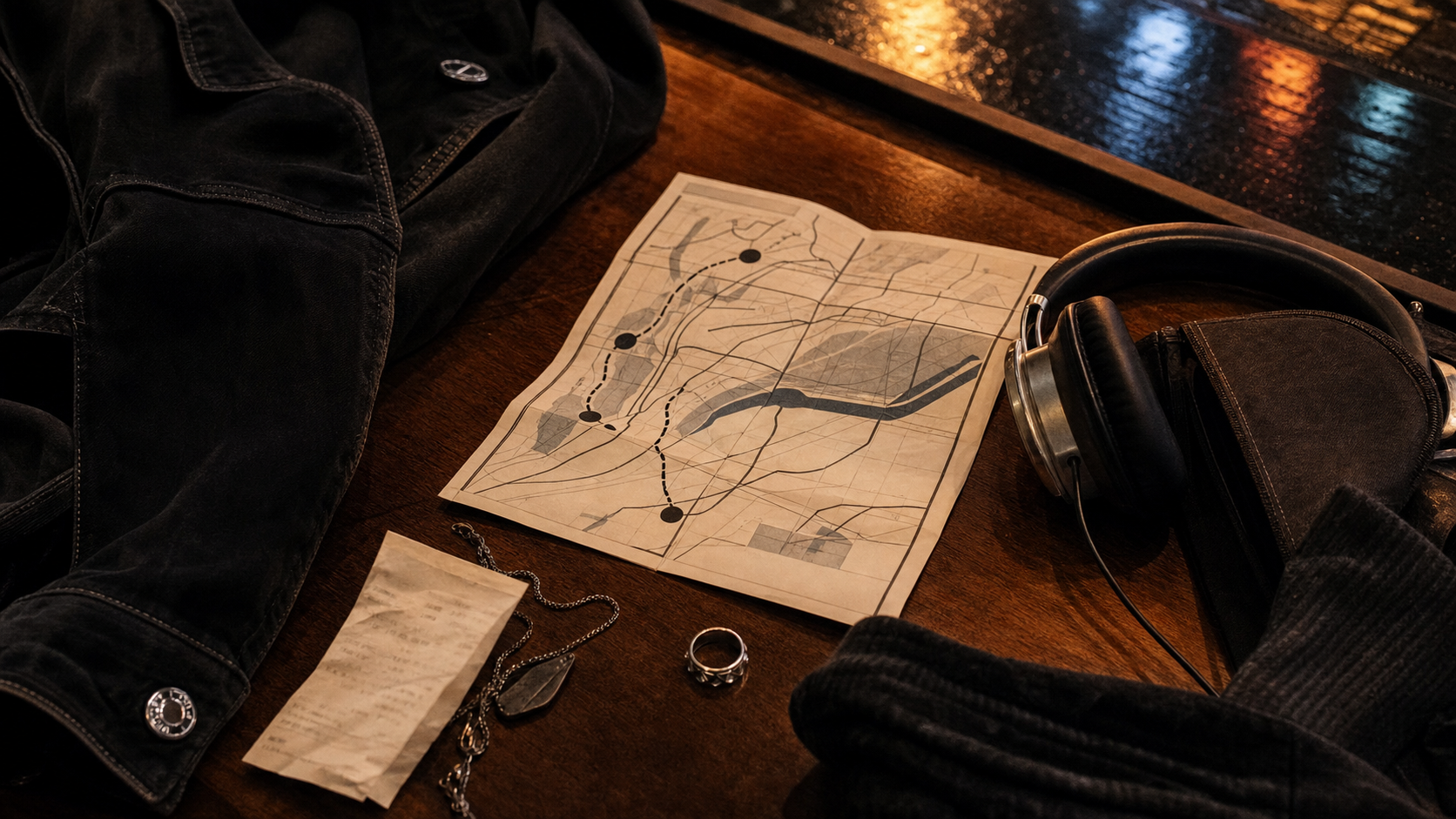
Clothing texture: black denim, cotton twill, soft knit, worn leather, one small silver flash. The look should have a touchable anchor and a quiet point of light. Nothing should require the room to understand a reference before it understands you.
Social move: ask the second question before reaching for the phone. The first question opens the door. The second question proves you are not just decorating the room with attention.
Boundary: if the room requires a louder version of you within twenty minutes, leave before you start auditioning. A playlist can be a social boundary if it tells the night what volume it is allowed to use.
Saveable rule: choose the track shape, not the identity costume. The first room is working when the music makes people less armored, the clothes let bodies move, and the exit still feels like a right instead of a failure.
No approved comments yet. The first reply sets the tone for everything that follows.